Monday, 21 November 2016

WAITING TO HAPPEN

International Federation of Red Cross & Red Crescent Societies defines a disaster as a sudden, calamitous event that seriously disrupts the functioning of a community or society and causes human, material and economic or environmental losses that exceed the community’s or society’s ability to cope using its own resources. Though often caused by nature, disasters can have human origins.
Reworking differently on the definition by IFRC it can be said that a disaster is a sudden calamitous event that can have career threatening consequences for a lead functionary, blunting his own discretion thereby rendering him incapable of using his own resources. It invariably has command and control origins.

The Principal of the College where I began my career as a lecturer had called a meeting. The college had just completed the construction of  a hostel for its students. It was a long standing demand and a genuine need for  the students who would come to this well reputed college from far and wide. The principal was very charged up. He began by impressing upon
all the members of the faculty present, the short and long term benefits of this acquisition and how he wanted to mark its inauguration by hosting a gala event. There will be the usual speeches by distinguished invitees, a cultural extravaganza by the students and the concluding speech by the chief guest. He looked in my direction and told me to conduct the proceedings of the programme.  I was taken aback as I was one of the newest inductees  to the college staff and in a manner of speaking had never been tested for any of my capabilities in anchoring any event in the college.  How could he shortlist me then? The stern imploring in his voice was inescapable. So I started preparing my script for the event in the right earnest.

The D day arrived.

 As I arrived at the venue I found it was already filled up with a very large number of people who either had passed out of the college or parents of those who were studying currently. And there were members of the society who came to witness the event. The entry was free except that selected people had been invited specially. The program went off very well and I
thought I did a fairly good job in anchoring the show. But then the disaster nearly happened.

While coming to the venue I had seen a separate enclosure where arrangement for tea and snacks had been made. I was not aware that there were invitations for special invitees to tea. As the function concluded and I was making my final and kind of dramatic remarks on the occasion full of my 'great performance' I thought I will extend the invitation to tea for all those five to six thousand people! Right then a girl performer, perhaps exhausted and dehydrated fainted. A few of the faculty and fellow students rushed to her. The principal came rushing and while overseeing her revival told me to conclude quickly. I accordingly announced the closure of the event.

Later when I told the principal that I was about to make a general announcement for  tea, extending invitation to everyone present, he looked aghast. They had made no such arrangements for such a huge gathering. What chaos would have followed if I had announced it! 


A very very high security VVIP of a friendly neighboring country was the guest of honour at one of the convocations of Vishwabharati at Shantiniketan. Besides the recipients of their degrees, this event attracts a very large number of ex-ashramites and many members of general public to this much awaited annual event.

The police and administrative arrangements during the visit of such VVIPs is the utmost priority for the State government. Maximum attention is paid to all aspects of security, logistics and other related arrangements. There are usually no deviations from the fixed drill which for such occasions has been tried, tested and laid on ground over years.  Senior most officers available are in attendance both for protocol as well as to oversee the arrangements.

As per schedule the VVIP would arrive around 11 or so from Kolkata by a chopper and will be taken to Uttarayan, the complex where Rabindranath Tagore lived and where arrangement for her brief stopover and meeting with the University officials and other dignitaries would be made. She would have light refreshments and would leave for Amra Kunj for the official function.

Everything was going as per schedule and as planned. At the appointed hour she emerged from the building to board her car for Amra Kunj. It was oppressively hot as the mid-day sun was beating us down.

And then this happened.

As the VVIP was about to board her car, to everyone’s  shock and horror and against all the rules of VVIP security,  I heard a voice suggesting to her that she walk the distance from Uttarayan to Amra Kunj and she will enjoy the walk! It was the senior most bureaucrat representing the Government who protocol-wise had the privilege of audience with the VVIP earlier.

And it would be quite some distance from Uttarayan to Amra Kunj.

Everyone present there was petrified at the prospect of the VVIP walking on the road in utter disregard to the principles of VVIP security. Such move had no clearance from anywhere. And district police had not catered for such eventuality in their police arrangements. Even before anyone could intervene or remonstrate, the VVIP started to walk leaving her car and convoy behind. Except for hurriedly providing a cover by a posse of uniformed policemen drawn from route lining, there was nothing much that could be done. While the VVIP was perspiring profusely on that hot and humid morning, the entire district administration had already broken in to a cold sweat.

At the end of what appeared to be an eternity, it turned out to be an uneventful walk but in total disregard to all the tenets of VVIP security. Later when we remonstrated with this senior officer, his only explanation was that he had no idea of distance between the two locations!

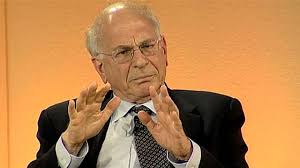
Daniel Kahneman is an Israeli-American psychologist, notable for his work on the psychology of judgment and decision-making, as well as behavioral economics, for which he was awarded the 2002 Nobel in Economic Sciences  In 2011, his book Thinking, Fast and Slow, which summarizes much of his research, was published and became a best seller.

Kahneman has demonstrated that ignorance increases confidence levels !


Thursday, 19 May 2016

WHO ARE YOU?


3 Idiots, a 2009 comedy-drama film directed by Rajkumar Hirani  was loosely adapted from the novel Five Point Someone by Chetan Bhagat.  Quoted below is a scene from its screen-play

Rancho tells Mr. Dubey the librarian, that the Dean had ‘remembered’ him. In his urgency to meet the Dean he leaves before taking the printout of the speech that he had prepared for Chatur to deliver in the Annual Function.

[Cut to  Mr Dubey sheepishly entering the Dean’s office]
Mr Dubey: Yes Sir?
[Dean Viru Sahatrabuddhe gives him a condescending look]
Viru: Who are you?
Mr. Dubey: Librarian… I’m permanent staff, Sir.
[He gives a fake smile]
Viru: [With an incredulous expression in his tone]: Congratulations!

The librarian has a look of shock, frustration, anger, combined with dismay at not being recognised by the head of the institution in which he must be serving for a fairly long time.
Prosopagnosia  also called face-blindness, is a cognitive disorder of face perception where the ability to recognize familiar faces, including one's own face (self-recognition), is impaired, while other aspects of visual processing (e.g., object discrimination) and intellectual functioning (e.g., decision making) remain intact.
Again, Anomic aphasia (also known as dysnomia, nominal aphasia and amnesic aphasia) is another cognitive disorder which most of us have experienced: forgetting someone's name. You'll probe your brain trying to remember, struggling to come up with even the first letter. Then you get frustrated and think "Why is it so hard for me to remember names?"
But here we are not talking of any medical cognitive disorder but of an administrative and more than that a selective cognitive disorder of people in position and authority.

A top cop used to visit us at Hyderabad to interact with young probationers almost with every batch and regularly. Each time during his stay he would visit me at my residence and would spend some informal time with us. My wife would rustle up a dinner which he would find delicious and apparently would enjoy a great deal. While leaving back for his State, he would invariably leave a small note for us expressing his appreciation for the food and our hospitality in general.

During one such visit to the Academy, he was informed that he had been appointed as the DGP of his State. In the meantime I had also received my orders for repatriation to my State.

As luck would have it, I saw him at the Airport and would be on the same flight. I went up to him, bubbling with the same informality with which we had met earlier and complimented him. He almost looked as if he was struggling to place me and with a wry thank you, accompanied with a get lost gesture of his right hand, dismissed me from his presence. Both I and my wife were stunned and for next few minutes we couldn’t speak to each other.

People feel bad when someone ignores them because people gain their self esteem from the approval of others. As we grow up we start to determine our worth based on the acceptance we get from others. In all fairness, we all have been ignored as well as being on the other side of the coin. Either way, it is an uncomfortable situation.

During my early days as a district officer, one day we were informed that the then Governor of the State accompanied by his wife shall visit the District headquarters. For a backward rural district it indeed was a very big event. And we were feeling greatly honoured and proud.   The Governor had also been a former Cabinet Secretary. Soon his tour program along with a routine advisory from the Raj Bhawan followed, detailing on his and his wife’s food preferences, blood groups, allergies, if any, his convenient timings to meet members 
of public, a list of selected persons he would like to meet as well as those who had sought appointment with him in advance. The district administration went in to an overdrive so to say, working out the required details. It was revealed that his preferred color was light shades of green. Accordingly it was decided that a fresh coat of paint will be applied to his suite in the Circuit House and the color will be changed to light green. New matching curtains will be brought and maybe we will find crockery with a tinge of green. The menu was worked out in great details and that Jeeves of the district administration, called Nazir Babu, was entrusted with organizing things under the personal supervision of the ADM. So, the flurry of activities commenced in the right earnest. 

We had a former Central Minister of State (MOS), a tribal leader from the District, who had fallen foul of the ruling party and had complained of being hounded by its members. He had seen me earlier in this regard and together with the District Magistrate we thought we had sorted out his issues.  But realizing its publicity value, he also sought and was granted audience by the Governor.

At the appointed hour the former MOS arrived waving at some waiting journalists and camera persons and anyone who cared to recognize him, with both his hands studded with ten rings on his eight fingers. I distinctly recall that there were two rings each on two of the fingers. I was left wondering that when he had so many rings on both of his hands evidently to ward off trouble and evil influences by providential intervention, what additional help could the Governor extend to him. But then his mission had been accomplished as he had registered his meeting with the Governor through the waiting journalists and camera persons. While being ushered in to the lounge of the Circuit House he informed whosoever was within his hearing range that this Governor was the Cabinet Secretary when he was a central minister in Delhi and they knew each other personally.

His agenda was known to us. Accordingly both I and the District Magistrate had already briefed the Governor. The former MOS opened his conversation by reminding the Governor of their several interactions in Delhi. The Governor without betraying any signs of familiarity said that he was unable to place him. Several minutes were spent in the former MOS trying to remind the Governor of many interactions, discussions on issues, conferences, meetings, location of his office chamber but nothing seemed to work. With a very distant look the Governor asked the ex-MOS his purpose to see him. Cut short, crestfallen and thwarted in his attempt at familiarity, the former MOS made a quick presentation and sought reddressal. The Governor appeared to have heard him intently and saying that he will look in to the matter dismissed him from his presence.

After he left, the bureaucrat in the Governor came alive He looked at the DM and SP who were wondering at his suddenly going distant and impersonal unlike his vibrant self. He said that having known politicians over long years in administration, he was certain that this out of job politician would have announced to the whole world of his familiarity with the Governor. And perhaps he would attempt to draw mileage on this count. This could be a negative publicity for anyone in authority considering he had come to lodge a protest and certainly not to reunite an old pal.  In discharge of your official duties you cannot afford familiarity. Not only that you should be impartial but should also be seen to be one.

‘Of course as the Cabinet Secretary, it was a part of my job to know each member of the cabinet!’


Saturday, 26 March 2016

MY NAME IS ANTHONY GONSALVES

IN one of the Districts that I served, I had a District Magistrate who was convinced that unless he asserted his authority continuously at all times and ad nauseum, no one was going to take him seriously. Tilting his head to an angle of ten minutes to six by the clock, every time he opened his mouth, he would start by declaring, ‘as District Magistrate I am saying this, ‘as District Magistrate my opinion is, ‘as District Magistrate I will hold this meeting…’ami Jela-Shashok hishabe bolchhii’…

All humans have a need to feel included and respected and have self-esteem and self-respect. Esteem presents a typical human desire to be accepted and valued by others. And what lengths does one go in this pursuit!

‘Didn’t see you yesterday (Tomake dekhlaam na!)’  Inquired Ashok after he did not find me attending a party hosted by a rich and famous person.
It was not the first occasion that he had asked me this question. Not that he was concerned about my well being. He was just confirming if I was included in the guest list like him and whether I was still counted. By checking with me he would reassure himself with a superior air and sadistic pleasure how important and valued a member of city’s elite community he was – a page three number indeed!

During the turbulent years of naxalite upsurge in the State, an Additional Superintendent of a North Bengal district, let us assume his name was Ram Singh, figured as a class enemy on the list of some naxalite outfit. On learning about the perceived threat to his life and contrary to a commonly expected reaction, he started to walk on foot between his residence and the Police Lines instead of taking his official car, in complete disregard to the diktat.  And to drive home the point further, he prominently displayed his name on a sticker pinned to his shirt. Now this was quite a sensational event for this small, sleepy and terror stricken town. Soon he became a household word for fearlessness and indomitable spirit.

Later, I found to my utter surprise and disbelief that his reputation had transcended the district boundaries.

Once, while posted in the undivided 24 Parganas, I had to rush to a rural police station area for some law and order issue. A leader of the ruling party appeared on the scene, much after we had dealt with the situation leading to the cooling down of tempers and restoration of normalcy.  While finally walking back to my car to leave for headquarters I thanked him for his presence and support. He looked at me and for whatever provocation, said ‘Ami apnaar naam sunechhi.’ (I have heard your name). So my name was also known! So I also had a reputation!  A warm and swirling sensation went throughout my insides much like a few shots of a single malt whisky. I felt a bit lightheaded, as my head began to swell. And then it all came down crashing. A sidekick of the leader turned round and whispered to him ‘Uni ki Ram Singh?’ (Is he Ram Singh?)


Freud and Shakespeare both recognized that the relationship between name and identity is so strong that the misrepresentation of a name amounts to a misrepresentation of the person. (My apologies for misrepresenting names in this narrative). But the sense of personal identity and uniqueness that a name gives us is at the heart of why names interest us and why they are important to us as individuals and to our society as a whole. 

From the time I remember listening to and appreciating Hindi film music, I have wondered why the hero of the film has had to introduce his personality in the film by way of a song. Raj Kapoor’s classic Awara’s (1948) title song Awara hoon is the earliest number perhaps that I remember. Song after song followed the trend like chhalia mera naam from Chhalia, or that Devanand number Akela hoon main is duniya mein, or Mera naam Raju gharana anam from Jis desh mein ganga behti hai or Main hoon Don. There are yet many more songs in this genre that I can recall.

Is it because that the hero is not sure whether the audience will accept him or include him in their fantasy world even when a film in nothing but a ‘willing suspension of disbelief’? Or does he lack the self-esteem.  If the films are a real life reflection of your personality, then surely all humans need to feel a sense of belonging and acceptance among their social groups, regardless whether these groups are large or small. Humans need to love and be loved – both sexually and non-sexually – by others.


Nagin, a great musical released in 1955, was a super hit film of its time. I remember several of its popular songs. In the Annual function of my junior school, one of its songs was played in the background in a play while the lead character carried a child character in his arms. Now that child happened to be studying in my section. All that the child had to do was to feign death in the arms of this character while the soulful Hemant Kumar number played in the background. I was very dejected nay almost heartbroken to see another child doing this role. I am convinced even now that I could have feigned death better. To this day I regret how they missed the opportunity to discover my histrionic talent!

Maslow's hierarchy of needs is often portrayed in the shape of a pyramid with the largest, most fundamental levels of needs at the bottom and the need for self-actualization at the top. Self-esteem reflects a person's overall subjective emotional evaluation of his or her own worth. It is a judgment of oneself as well as an attitude toward the self.

The name is Bond, James Bond.

Why does he have to introduce himself twice in the same breath- right from Sean Connery, George Lazenby, Roger Moore, Timothy Dalton, and Pierce Brosnan to Daniel Craig!

Of course there is a lot in the name notwithstanding the Shakespearian perspective: ‘What’s in a name’.


My firm belief in my importance in the social circuit sometime makes me to imagine myself in the great Amitabh Bachhan character and in his inimitable baritone introduce myself to the world …Anthony… Anthony Gonsalves


And then I have two choices. Like him I turn around and in a lightening action give a hard punch in the face of the guy standing next to me who had the audacity of demanding  the introduction of such an important person or break into a jig to convey my intense desire to be wanted… main duniya mein akela hoon.

Feeling important makes you drunk on yourself. Feeling wanted makes you a human being high on someone else.


What is your elixir? 


Saturday, 30 January 2016

ONCE UPON A TIME

The boast of heraldry, the pomp of pow’r,
All that beauty, all that wealth e’er gave
Awaits alike th’ inevitable hour.
The paths of glory lead but to the grave.
                                         Thomas Gray

Once upon a time in Wonderland, there lived a king. He appeared gentle in his demeanour. But it was his whiskers thick and dark that concealed his venomous fangs. He was as soft spoken as the hiss of a Russell’s viper and as smooth as a rattle snake. He never laughed heartily for fear of baring his fangs. And he had no friends because he never laughed. He had a hundred thousand strong cavalry at his command, ready to do his bidding.

The King, being the monarch of all that he surveyed, had the world at his doorstep. He lived in a huge castle and if you could take on several alligators in the moat surrounding the castle and go past ferocious lions guarding his entrance and may be convince two very agreeable gentlemen with swords outside his chamber, you might reach him.

He rode any one of his five golden chariots and lived blissfully ignorant of the inanities of a routine statecraft.  The nitty-gritty was boring and the hoard of loyal and honest workers insipid. But he was ambitious. He hated anyone giving him sound advice. For he had appointed a few handpicked advisers who were as keen and sharp as only to give him that advice which they knew he was seeking affirmation for. And he was ambitious. He wanted to subjugate all his rivals and would with great ambition survey around to see that he was standing tall amidst the ruins.

He wanted to perpetuate his reign. And he wanted to erase all the memories of the previous rulers and crush any threats to his throne and he wanted his era to be remembered for ever. So he called his handpicked advisers to give him the right as advice. The advisers arrived forthwith as they always waited at his gate to be called in. The king glanced at his advisers, liveried and resplendent, in their shining armour.

And thus spake the King: “Hear ye all my worthy advisers. I have summoned you for you are my chosen cronies and will do anything to appease me. I am proud that I am unaware of the ground realities. And on the strength of my ignorance, I want to bring about all-round changes in the governance of my kingdom. I have already thrown out the rule book in the moat outside and have archived many time honoured practices.  I make my own rules and write my own history. As the first step to achieving the unbridled power, I want to incapacitate all of my chieftains so the world looks only up to me as the sole savior. I want to silence the voices of dissent. And I want to be loved and remembered by my subjects as a kindhearted, benevolent, fair and just king.”

The worthy advisers watched in awe as the king spoke and admired the vision and foresight of their master.

So the worthy advisers promptly retreated and huddled in the darkness of the night, deliberated amongst themselves in whispers. They deliberated for two days and returned with a plan. Only the noble king or his worthy advisers, in the name of the king shall issue all the commands. All the powers shall be centralized. Favours and rewards shall be bestowed only on the chosen ones.

The king heard his advisers with admiration and pride. ‘How fortunate I am’ said the king ‘to have chosen you to share my vision!’ Thereafter the king walked the earth as if he owned it forever. He felt taller by a few inches and his gaze turned to steel. The implementation had to be firm and unfaltering.

Seasons came and went. The winter turned in to summer and the summer in to rainy season.

The resolve of the king had a miraculous impact on his large flock of chieftains. They withdrew in to silence. They became increasingly ineffective. They stopped doing anything on their own initiative and waited for directions even in their designated fields. And the leaders of his cavalry meekly surrendered their powers to the whims of the king. Upright chieftains were in a perpetual fear of being hounded out. The king and his worthy advisers kept a close watch on everything happening around. And now all the voices of dissent having been effectively gagged, the king began to create an order of suspicion and distrust and intrigue.

As I told you, seasons came and went. The winter of despair came again-cold and stark. As the winter started to recede and summer winds set in, there was a strange quiet of expectancy. This was the time when snows began to melt, green began to turn gray and no birds sang. Spring was one season that was missing in the kingdom and with that all signs of hope, growth and new life. The spring was far behind.

Then the gentle breeze began to grow stronger. The winds of change began to sweep the length and breadth of Wonderland. All good things must come to an end, a wise adviser mused. The king looked at the mirror. ‘How horrible am I looking!’ He broke in to a cold sweat. He rolled his trembling fingers on to his whiskers only to find that his fangs had blunted, his hitherto glowing skin withered and his roar turned into a whimper. He panicked. ‘Time is running out for me!’ He suddenly missed a friend. But he didn’t have one for he never laughed.

He urgently wanted to consult his ever faithful advisors. He sent for them and waited impatiently. He jumped from his throne and started pacing up and down. He waited.

He looked out of the window. It was all still and silent in the immediate surroundings, though a fierce storm was beginning to blow in the distance. The ferocious lions had broken lose and appeared to have bolted to their natural abode in the jungle. The two very agreeable gentlemen with swords were nowhere in sight. The king panicked even further but waited. An inexplicable fear gripped him.


Far in the courtyard his golden chariots were missing.

The sun shone brightly in the middle of the sky and he waited. The evening shadows started lengthening and he waited. An eerie silence descended upon his castle. He waited and waited till he dropped to the floor disappointed, heartbroken and lonely. He longingly looked at the throne which he always thought was his forever. He soon fell into a deep but disturbed slumber, exhausted and tired.

And I watched it all happen with my eyes wide open until the strain hurt my eyes. I was overwhelmed. I must immortalize the unique life and times of our beloved king and his eternal wait for his advisers to turn up.

And then I dipped my feather pen in the ink-pot, drained the extra ink on the side and with tears in my eyes began to write…


Once upon a time in wonderland, there lived a king…


Thomas Gray

Wednesday, 13 January 2016

COMETH THE MAN

IN the 1948 England vs South Africa test series, in the first test at Kingsmead, Durban, England needed eight runs off the last eight-ball over, with nos.9 and 10 at the crease. In fading light and on a drying wicket that was giving the bowlers every assistance, England got home after a leg-bye was scored off the last ball of the game, when the ball struck the no.10, Cliff Gladwin, on the thigh and a single was scrambled. The Derbyshire bowler is remembered mostly for this batting feat and his immortal words: "Coometh the hour, coometh the man." As to whether he created the phrase or had heard it before - that is anyone's guess.

How is the urgent danger staved off by the arrival of just the right man at just the right time? Happy accident or the hand of fate?

It was a cold morning in late November when I along with five of my colleagues was trekking up to the Rohtang Pass situated at an elevation of 3,978 m (13,050 ft)) on the eastern Pir Panjal Range of the Himalayas around 51 km from Manali. The pass lies on the watershed between the Chenab and Beas basins and connects the Kullu Valley with the Lahaul and Spiti Valley.

It was a clear day and the sky was so blue and looked so close that you actually could touch it if you raised your hand. Though the sun shone brightly, it was freezing cold. There was thick cover of snow all over and it was remarkably quiet.  We had crossed Marhi and were moving slowly to reach the origin point of Beas atop Rohtang Pass. At least that is what we had planned. The snow was hard set and at places it was very slippery. Most of us having no experience of mountaineering were making very careful moves.

The Rani Nala glacier point on way to Rohtang Pass was covered with snow. We did not know that it remained snow clad throughout the year; sometimes the snow fall being as high as 20 feet. I did not even know that it was a frozen glacier. Well, while crossing the Nala we came across a long ledge of about 20 feet or so. It was a narrow strip and had a straight drop of about 500 feet or so below. Leaning and putting our weight on the snow covered mountain side, we all negotiated it. It must have been past noon.

All of a sudden the weather changed. Strong winds started blowing. The sky turned gray and the temperature dropped several degrees. It felt very very ominous. A blizzard was surely on the anvil.  All of us then decided to return as fast as we could because we apprehended that we might get stranded in that snow or blown away by the gusty winds now gaining a fierce velocity with every passing minute. So we all turned back and started walking as fast under the circumstances as we could with winds occasionally throwing us off balance. As we came on the narrow ledge over the Rani Nala that we had crossed on our way up some time back, we discovered to our horror that the narrow ledge had become narrower with only a scarcely visible strip that could at best hold the size of a shoe. The sharp drop looked deeper. Three of them ahead of me somehow crossed it one by one. There was no space to walk abreast. I was the next to follow. As I stepped on to that strip and was trying to negotiate it, the worse happened.  I lost balance and slipped half way through. While I was holding on to the narrow strip of the ledge with one knee, my other leg was dangling down towards the gorge. In a split second this horrible spectre of falling in to the deep gorge of the glacier and dying a snowy death loomed large on me. Shifting my weight on to the snow covered mountain slope, I dug my fingers in to the snow. Soon my hands went numb and lost sensation. There was a wrenching pain in my arms and body and it felt like I was paralyzed. I was fast giving up hope of surviving. I closed my eyes. I can’t remember if I prayed.

Suddenly a firm hand caught me from my arm and saying something that sounded like words of encouragement, put me back on my feet and holding my hand led me across, for what felt like an eternity, to the safe ground. My entire body was frozen partly with cold and partly with panic, shock and the fear of death. This was the first time I experienced the cold sweat. This was the first time I saw the possibility of death so closely staring in my face.  

Who was this angel? He was a local from Lahul valley going across to the Manali side. His familiarity with the terrain and weather conditions saved me.  Thank God he was there.

Where do these angels come from? How is the urgent danger staved off by the arrival of just the right man at just the right time? Happy accident or the hand of fate?

About a quarter of a century back a relative of mine was admitted to Apollo Hospital Chennai for a heart bypass surgery. Unlike today’s medical advancement in this field, it was an event extraordinaire back in those days. I had to rush to Chennai to be by his side as he was all alone and his family was in Sibsagar district of Assam where was currently posted. The operation was to take place in two days’ time. Besides being with the patient during visiting hours, I had no other occupation. So one afternoon I decided to call on the Police Commissioner of Chennai. A very senior officer with big handlebar moustaches he defied the forbidding image of a tough cop by his gentle manners. I had briefly met him on another occasion. I was received with warmth and cordiality by him and over a cup of filtered coffee he asked me the purpose of my visit.  I spent about 15/20 minutes with him and left.

Later in the day I prepared myself to visit my relative in Apollo. At that point of time and perhaps even now Apollo Chennai has been a hospital of a great repute for its Cardiology department and heart bypass surgery. Patients from far and wide would come to this hospital. As a result the lobby would be crowded; rooms would not be available immediately and there would be long queues to see the concerned doctors. No one was treated as more important than the other and having to cope up with the pressure of having so many patients, the services would slacken sometime.

I reached the Hospital as the clock announced the visiting hour. As I approached the room of my patient I noticed an inspector of police standing outside the room. I could not figure out why should a cop be there standing as if guarding this room. As I entered the room, I found a couple of doctors along with the senior surgeon who was to operate my relative, standing there bent over my relative as if examining him. I panicked and a sense of fear crossed my mind. Has something untowards happened ? Then I noticed the Commissioner of Police sitting in a chair and surrounded by the doctors talking to my relative. He looked at me and soft spoken as he was he suddenly became kind of defensive and said ‘I was just passing by. I thought I will look up your relative.’ I was totally dumb-founded. I didn’t know how to react. Rising from his chair, he said ‘Your relative is fine. I have spoken to the doctors. Don’t worry. He is in safe hands.’ Escorted by the Inspector he left the room and like a zombie I followed him to his car. 

I recall that I had never told him either the name of my relative or his room number.  Then how did he in the several blocks of this hospital find my relative out? As he left, this inspector turned to me and said, ‘Saar, in the afternoon the CP had called me to find out your relative. I had great difficulty in locating him as there was no clue available with me.’

It is difficult for me to describe what this visit did to my patient. The level of care and concern for him went a few notches higher and during his surgery he was surrounded by a bevy of doctors from several streams, an unusual event some attendants and patients continued talking about long after. I am still wondering what impelled him to go and visit a relative of a junior officer whom he hardly knew.

As I arrived in Hyderabad to join my new posting, I was confronted with the problem of admission for my daughter to a premier convent school. I was a stranger in Hyderabad and did not know any one in particular in the city. So I called up the Additional Commissioner of the city police whom I had met just once. Soon after he called me to say that the principal would see me on a particular day. I was grateful to him for having spoken to the principal and having fixed my appointment. In the meantime we were informed that the MOS Home would be visiting the Academy on the very same day when my appointment with the principal was fixed.  I had certain assigned duties in connection with the visit and so it was not possible for me to go and meet the principal. Well, the MOS Home arrived on the appointed day, stayed with us for a couple of hours and left. After his departure I called the Addl CP to inform him that I could not go to see the principal. ‘I know MOS Home was visiting you and you would not be able to go and meet the principal, But don’t worry. I went and met the principal. Your daughter’s admission is through. Tomorrow go to the school and deposit her fee!

I have stated it earlier. I am still wondering. Where do these angels come from? What impels them to stand by you in your hour of crisis? How is the urgent danger staved off by the arrival of just the right man at just the right time? Happy accident or the hand of fate?

Only if I could find an answer before the gusty winds of eternity set sail to my life boat on an uncharted course.